
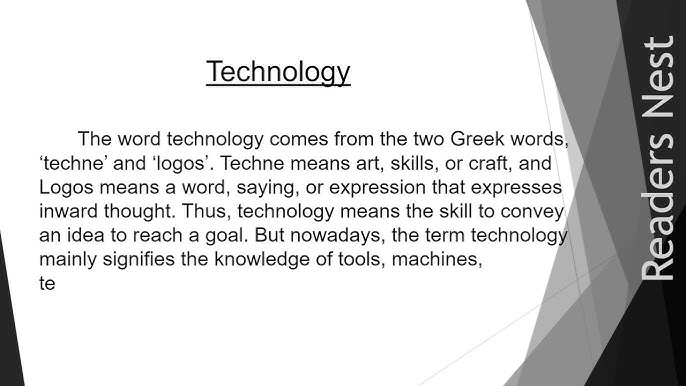
What Does the Word “Technology” Mean?
Technology is part of everyday life, but the word can mean more than computers, smartphones and other electronic devices. In its broadest sense, technology is the use of knowledge, skills, methods and tools to solve problems or achieve practical aims.
A broad definition
Technology includes objects people make, such as a wheel, a kettle or a satellite. It also includes the processes and know-how used to create and operate them. A farming technique, a system for purifying water and a method of sending information across a network can all be described as technologies.
In casual conversation, “technology” often refers to modern digital equipment and systems. People might use the word to mean artificial intelligence, mobile phones, software or the internet. This is a common use of the term, but it is narrower than its wider meaning.
Where does the word come from?
The word is rooted in the Greek technē, meaning skill, craft or art, and logia, meaning a study or account. Its history reflects an association with practical knowledge and skilled work. Today, the term is generally used for the practical application of knowledge, rather than simply the study of a subject.
Technology and science: what is the difference?
Science seeks to understand the natural world through observation, evidence and testing. Technology applies knowledge and practical skills to make things, carry out tasks or address needs. The two are closely connected: scientific discoveries can lead to new technologies, while technologies such as microscopes and telescopes can help scientists make further discoveries.
However, technology does not always depend on a recent scientific breakthrough. People developed useful tools and techniques long before modern science existed. The plough, for example, is a technology built through practical experience and accumulated knowledge.
Examples of technology
- Everyday objects: glasses, bicycles, ovens and washing machines.
- Communication: writing, printing, telephones and video calls.
- Medicine: vaccines, diagnostic equipment and surgical instruments.
- Transport: roads, trains, aircraft and navigation systems.
- Digital tools: computers, apps, online services and artificial intelligence.
Why does the meaning matter?
Thinking of technology only as digital devices can make its influence seem more limited than it is. Technology shapes how food is grown, how buildings are made, how healthcare is delivered and how people communicate. It can save time and make tasks easier, but it can also create challenges involving privacy, access, safety and the environment.
So, what does the word “technology” mean? It refers to the tools, techniques, systems and practical knowledge people use to meet needs and solve problems. Some technologies are highly advanced; others are simple and familiar. Together, they show how human creativity turns knowledge into practical solutions.
Understanding Technology: 9 Insights into Its Meaning and Impact
- Technology means using knowledge to solve practical problems.
- It includes tools, machines and systems.
- Technology can be simple, like a wheel.
- It can be advanced, like a computer.
- Technology is not limited to electronics.
- It includes methods and processes as well as objects.
- People create technology to make tasks easier or faster.
- Technology changes as new ideas and inventions develop.
- The word can refer to a field of knowledge or its practical results.
Technology means using knowledge to solve practical problems.
Technology means using knowledge to solve practical problems and meet everyday needs. It can involve creating a tool, developing a method or applying an idea to make a task easier, faster or more effective. From a simple wheel to a modern smartphone, technology takes many forms—but its purpose is to help people do things in practical ways.
It includes tools, machines and systems.
Technology includes the tools, machines and systems people create and use to solve problems or make tasks easier. These can be simple, such as a hammer or a hand-operated pump, or complex, such as a computer network or a transport system. Technology is not limited to electronic devices: it also includes the methods and processes that help these tools and systems work.
Technology can be simple, like a wheel.
Technology doesn’t have to be complicated or digital. A wheel is a simple example: people used knowledge and practical skills to create a tool that makes moving objects easier. It shows that technology can be any useful invention or method designed to solve a problem, from basic tools to advanced computers.
It can be advanced, like a computer.
Technology can be simple or highly advanced, depending on how it is designed and used. A computer is an example of advanced technology: it uses complex hardware and software to process information, run programmes and help people communicate, learn and work.
Technology is not limited to electronics.
Technology is not limited to electronics. It includes any practical tool, technique or system people develop to solve problems or make tasks easier. A wheel, a plough, a pair of glasses and a water purification method are all examples of technology, just like a computer or smartphone. Thinking about technology this way shows how it has shaped everyday life throughout history—not only through digital devices, but also through simple inventions and useful skills.
It includes methods and processes as well as objects.
Technology includes more than physical objects such as computers, phones and machines; it also covers the methods and processes used to create, operate or improve them. For example, a water filter is a piece of technology, while the steps used to clean and distribute the water are technologies too. In this broader sense, technology is the practical knowledge and techniques people use to solve problems and get things done.
People create technology to make tasks easier or faster.
People create technology to make tasks easier or faster, whether by inventing a simple tool or developing sophisticated software. A washing machine, for example, reduces the time and effort needed to clean clothes, while navigation apps help people find routes more quickly. In this way, technology applies practical knowledge to everyday challenges, helping people work more efficiently and solve problems.
Technology changes as new ideas and inventions develop.
Technology changes as new ideas and inventions develop. Tools and methods that once seemed cutting-edge can become part of everyday life, while fresh discoveries create new ways to solve problems and carry out tasks. This means technology is not limited to a fixed set of devices; it continually evolves with human knowledge, needs and creativity.
The word can refer to a field of knowledge or its practical results.
The word “technology” can refer both to a field of knowledge and to the practical results of applying that knowledge. It includes the skills, methods and understanding used to solve problems, as well as the tools, systems and processes created from them. For example, knowledge of engineering is part of technology, while a bridge designed and built using that knowledge is one of its practical results.
Author

manually@ipower.eu
Related Posts
Updates of New Technology: The Latest Innovations Shaping Our Future
Latest Updates in New Technology The world of technology is ever-evolving, with breakthroughs and innovations emerging at a rapid pace. From artificial...
Read out all
Advancement in Technology Articles: Innovations Shaping Our Future
The Evolution of Technology: A Glimpse into the Future In today’s rapidly changing world, technology is advancing at an unprecedented pace. From...
Read out all
Top Technology News Today: The Latest Innovations and Trends
Top Technology News Today Top Technology News Today In the rapidly evolving world of technology, staying informed about the latest developments is...
Read out all
Modern Technology Articles: Innovations Shaping Our Everyday Lives
The Evolution and Impact of Modern Technology Articles In today’s fast-paced digital age, modern technology articles have become a cornerstone for disseminating...
Read out all
English Article About Technology: How Innovation Is Shaping Our Future
The Impact of Technology on Modern Society In the 21st century, technology has become an integral part of everyday life, influencing the...
Read out all
Future Technology News Articles: Innovations Shaping Tomorrow
The Future of Technology News: What to Expect As we stand on the brink of a technological revolution, the landscape of technology...
Read out all