
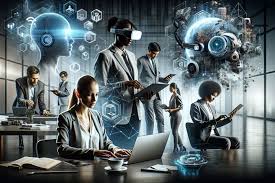
The Latest Technology Transforming Business in 2023
In the rapidly evolving world of business, staying ahead of technological advancements is crucial for maintaining a competitive edge. As we progress through 2023, several key technologies are reshaping how businesses operate, innovate, and interact with customers. From artificial intelligence to blockchain, these innovations are setting new standards across industries.
Artificial Intelligence and Machine Learning
Artificial Intelligence (AI) and Machine Learning (ML) continue to revolutionise business processes. AI-driven analytics provide companies with deeper insights into consumer behaviour, enabling more personalised marketing strategies and improved customer experiences. Machine learning algorithms enhance decision-making by predicting market trends and identifying operational efficiencies.
Moreover, AI-powered chatbots are enhancing customer service by providing instant responses and support around the clock. This not only improves customer satisfaction but also reduces the workload on human staff.
The Rise of Blockchain Technology
Blockchain technology is no longer confined to cryptocurrencies; it has emerged as a transformative force in various sectors such as finance, supply chain management, and healthcare. Businesses are leveraging blockchain for its transparency, security, and ability to streamline operations.
In supply chains, blockchain ensures traceability of products from origin to consumer, reducing fraud and enhancing trust among stakeholders. In finance, it facilitates faster transactions with reduced costs by eliminating intermediaries.
5G Connectivity
The rollout of 5G networks is set to revolutionise communication within businesses. Offering significantly faster data speeds and lower latency than its predecessor, 5G enables seamless connectivity across devices and platforms.
This enhanced connectivity supports the growth of the Internet of Things (IoT), where interconnected devices communicate in real-time to optimise operations. Industries such as manufacturing benefit from smart factories that use IoT devices for predictive maintenance and efficient resource management.
Remote Work Technologies
The shift towards remote work has accelerated the adoption of digital collaboration tools. Platforms like Zoom, Microsoft Teams, and Slack have become integral in maintaining productivity outside traditional office environments.
Additionally, cloud computing services allow employees to access company resources securely from anywhere in the world. This flexibility not only supports work-life balance but also broadens talent pools by enabling companies to hire top talent irrespective of geographical location.
Sustainability Through Technology
Sustainability has become a business imperative rather than an option. Companies are leveraging technology to reduce their environmental impact while improving efficiency. Innovations such as energy-efficient data centres powered by renewable energy sources demonstrate how technology can align with sustainability goals.
Furthermore, advanced analytics help businesses track their carbon footprint more accurately and implement strategies that contribute towards a greener future.
Conclusion
The integration of these latest technologies into business strategies is not just about staying current; it’s about driving innovation that leads to long-term success. As companies continue adapting these advancements into their operations throughout 2023 and beyond they will find themselves better equipped to meet challenges head-on while seizing new opportunities for growth in an ever-changing landscape.
Five Benefits of Cutting-Edge Technology in Business: Boosting Efficiency, Decision-Making, Customer Experience, Security, and Global Connectivity
- Enhanced Efficiency
- Improved Decision-Making
- Enhanced Customer Experience
- Increased Security
- Global Connectivity
Challenges of Modern Technology in Business: Cybersecurity Risks, Job Displacement, High Costs, and the Growing Digital Divide
- Increased cybersecurity threats due to reliance on digital systems
- Potential job displacement as automation and AI replace certain roles
- High initial costs of implementing and upgrading technology solutions
- Digital divide widening between businesses with access to advanced tech and those without
Enhanced Efficiency
The advent of the latest technology in business brings forth a significant advantage in the form of enhanced efficiency. By streamlining business processes, automating repetitive tasks, and boosting overall productivity, companies can operate more smoothly and effectively. This increased efficiency allows employees to focus on high-value tasks that require human creativity and critical thinking, leading to improved outcomes and a competitive edge in the market.
Improved Decision-Making
With the advancement of technology in business, one notable benefit is the enhancement of decision-making processes. Through advanced analytics, companies gain access to valuable insights derived from data analysis. These insights empower businesses to make informed, data-driven decisions that lead to improved outcomes and increased efficiency. By leveraging the power of technology to drive decision-making, organisations can identify trends, predict market shifts, and optimise strategies with a higher level of precision and confidence.
Enhanced Customer Experience
Enhanced customer experience is one of the most significant benefits that modern technology brings to businesses. With the integration of AI and chatbots, companies can now offer personalised interactions that cater to individual customer preferences and needs. These technologies facilitate quick responses, ensuring that customer queries are addressed promptly, thereby reducing wait times and increasing satisfaction. Moreover, the availability of 24/7 support means that customers can access assistance at any time, regardless of time zones or business hours. This constant accessibility not only boosts customer loyalty but also enhances the overall brand reputation by demonstrating a commitment to exceptional service. As a result, businesses can build stronger relationships with their customers, leading to increased retention and long-term success.
Increased Security
With the integration of cutting-edge cybersecurity measures, the latest technology in business offers a significant pro in the form of increased security. By utilising advanced security protocols, businesses can safeguard their sensitive data from cyber threats, ensuring not only the continuity of their operations but also fostering trust among customers and stakeholders. This heightened level of security not only mitigates risks associated with data breaches but also instils confidence in the reliability and integrity of the business’s digital infrastructure.
Global Connectivity
Global Connectivity is a significant advantage of the latest technology in business. Technologies like cloud computing and remote collaboration tools have revolutionised the way companies operate on a global scale. By enabling seamless communication and operations across geographies, businesses can now connect with employees, partners, and customers worldwide in real-time. This not only enhances productivity but also fosters collaboration and innovation without being limited by physical boundaries. Global Connectivity empowers businesses to expand their reach, tap into diverse markets, and create a truly interconnected global network that drives success in the digital age.
Increased cybersecurity threats due to reliance on digital systems
One significant drawback of the latest technology in business is the heightened cybersecurity risks stemming from the heavy reliance on digital systems. As companies embrace advanced technologies to streamline operations and enhance efficiency, they inadvertently expose themselves to a myriad of cyber threats. From data breaches to ransomware attacks, the digital landscape presents a fertile ground for malicious actors seeking to exploit vulnerabilities in business networks. The intricate interconnectedness of modern systems amplifies the impact of cybersecurity breaches, potentially leading to financial losses, reputational damage, and compromised sensitive information. Businesses must proactively invest in robust cybersecurity measures and employee training to mitigate these risks and safeguard their digital assets from evolving cyber threats.
Potential job displacement as automation and AI replace certain roles
One significant con of the latest technology in business is the potential job displacement caused by the automation and integration of Artificial Intelligence (AI) into various processes. As businesses embrace efficiency-driven technologies, certain roles that rely on repetitive tasks or manual labour are at risk of being replaced by machines and algorithms. This transition can lead to unemployment and a shift in the job market, requiring individuals to upskill or reskill to remain relevant in an increasingly automated workforce. The challenge lies in balancing technological advancements with the preservation of human employment opportunities and ensuring a smooth transition for those affected by job displacement.
High initial costs of implementing and upgrading technology solutions
One significant drawback of the latest technology in business is the high initial costs associated with implementing and upgrading technology solutions. For many companies, investing in cutting-edge technologies requires a substantial financial commitment that may strain budgets and resources. From purchasing hardware and software to training employees on new systems, the upfront expenses can be daunting. Moreover, the rapid pace of technological advancements often necessitates frequent upgrades to stay competitive, leading to ongoing costs that can be challenging to sustain for some businesses. The financial burden of adopting new technologies can hinder smaller enterprises from fully harnessing the benefits that modern tech solutions offer, creating a barrier to innovation and growth.
Digital divide widening between businesses with access to advanced tech and those without
One concerning consequence of the latest technology in business is the widening digital divide between companies that have access to advanced tech tools and those that do not. This disparity can create significant challenges for businesses without the resources to invest in cutting-edge technologies, as they may struggle to compete effectively in an increasingly digital marketplace. The divide not only hinders innovation and productivity but also exacerbates existing inequalities, potentially limiting opportunities for growth and success among businesses that are unable to keep pace with their tech-savvy counterparts. Addressing this issue is crucial to ensure a level playing field and promote inclusivity within the business landscape.
Author

manually@ipower.eu
Related Posts

Exploring the Technological Innovations of the United States
The Technological Landscape of the United States The Technological Landscape of the United States When it comes to technology, the United States...
Read out allBreaking Technology Company News: Latest Developments in the Tech Sector
Latest News in the World of Technology Companies Latest News in the World of Technology Companies The technology sector continues to be...
Read out all
Embracing the Era of More Technology: Navigating a Digital Future
The Impact of More Technology in Our Lives The Impact of More Technology in Our Lives Technology has become an integral part...
Read out allThe Transformative Power of Thriving Technologies: A Journey Through Innovation
The Evolution of Technologies The Evolution of Technologies Technology has become an integral part of our daily lives, shaping the way we...
Read out all
Unlock Your Potential: Embrace Personal Fitness for a Healthier You
The Importance of Personal Fitness The Importance of Personal Fitness Personal fitness is not just about having a toned body or looking...
Read out all
Exploring the Latest Innovations in Technology Around the World
The Latest Innovations in Technology Around the World The Latest Innovations in Technology Around the World Technology is advancing at a rapid...
Read out all