
The Future of Connectivity: Exploring 6G Technology
In today’s fast-paced digital world, staying connected is more important than ever. As we witness the rapid evolution of technology, discussions around the next generation of wireless networks are already underway. While 5G is still rolling out across the globe, researchers and experts are looking ahead to what lies beyond – 6G technology.
What is 6G?
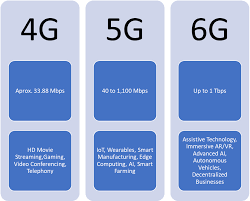
6G refers to the sixth generation of wireless technology that is expected to succeed 5G in the coming years. While 5G has brought us faster speeds and lower latency, 6G aims to take connectivity to a whole new level. Anticipated to be even faster, more reliable, and capable of supporting a wide range of applications, 6G technology promises to revolutionise how we interact with the digital world.
Potential Features and Benefits
One of the key features expected in 6G networks is terahertz frequency communication. This would enable data transfer rates that are hundreds of times faster than current technologies, paving the way for seamless streaming, instant downloads, and real-time communication on an unprecedented scale.
Furthermore, 6G technology could facilitate advancements in areas such as artificial intelligence, virtual reality, augmented reality, and Internet of Things (IoT) devices. With ultra-low latency and enhanced reliability, industries ranging from healthcare to manufacturing could benefit from improved efficiency and productivity.
Challenges and Considerations
While the potential of 6G technology is exciting, there are challenges that need to be addressed before its widespread implementation. These include issues related to spectrum availability, infrastructure requirements, security concerns, and ensuring equitable access for all users.
The Road Ahead
As we look towards a future powered by 6G technology, collaboration between industry stakeholders, governments, and research institutions will be crucial in driving innovation and overcoming obstacles. By working together to address technical challenges and societal implications, we can create a connected world that benefits everyone.
In conclusion, while 6G technology may still be on the horizon, its potential impact on our lives cannot be overstated. From transforming industries to enhancing everyday experiences, the possibilities are endless. As we continue to push the boundaries of connectivity, one thing is certain – the future looks brighter with each leap forward in wireless technology.
Exploring the Advantages of 6G Technology: Speed, Reliability, and Innovation
- Ultra-fast data transfer speeds for seamless streaming and downloads.
- Enhanced reliability and connectivity, leading to improved user experiences.
- Support for advanced technologies like AI, VR, AR, and IoT applications.
- Potential for increased efficiency and productivity across various industries.
- Opportunity to revolutionize communication with ultra-low latency capabilities.
Exploring the Challenges of 6G Technology: Health, Environment, Cost, Privacy, Interference, and Regulation
- 1. Health Concerns
- 2. Environmental Impact
- 3. Affordability
- 4. Privacy Issues
- 5. Interference with Existing Systems
- 6. Regulatory Challenges
Ultra-fast data transfer speeds for seamless streaming and downloads.
With 6G technology, users can experience ultra-fast data transfer speeds that enable seamless streaming of high-definition content and lightning-fast downloads. This pro of 6G not only enhances the entertainment experience by eliminating buffering and lag but also improves productivity by allowing for quick access to large files and resources. Whether enjoying your favourite shows without interruptions or downloading files in a matter of seconds, the ultra-fast data transfer speeds of 6G technology redefine the possibilities of connectivity in the digital age.
Enhanced reliability and connectivity, leading to improved user experiences.
Enhanced reliability and connectivity are key advantages of 6G technology, promising to revolutionise user experiences across various digital platforms. With more stable connections and seamless communication, users can expect smoother interactions, faster response times, and a heightened sense of reliability in their online activities. From uninterrupted video streaming to real-time gaming experiences, the improved connectivity offered by 6G technology is set to elevate user satisfaction and engagement to new heights, ultimately enhancing the way we interact with the digital world.
Support for advanced technologies like AI, VR, AR, and IoT applications.
The advent of 6G technology brings forth a significant advantage in its support for cutting-edge technologies such as artificial intelligence (AI), virtual reality (VR), augmented reality (AR), and Internet of Things (IoT) applications. With the enhanced capabilities of 6G networks, these advanced technologies can thrive and reach their full potential, revolutionising industries and everyday experiences with unprecedented levels of speed, reliability, and connectivity.
Potential for increased efficiency and productivity across various industries.
The potential for increased efficiency and productivity across various industries is a compelling pro of 6G technology. With its promise of ultra-fast speeds, low latency, and enhanced reliability, 6G has the capability to revolutionise how businesses operate. From streamlining processes in manufacturing and logistics to enabling real-time data analysis in healthcare and finance, the advancements brought by 6G could lead to significant improvements in operational efficiency and overall productivity. Embracing 6G technology has the potential to unlock new opportunities for innovation and growth across a wide range of sectors, driving progress and competitiveness in the global marketplace.
Opportunity to revolutionize communication with ultra-low latency capabilities.
With its ultra-low latency capabilities, 6G technology presents a remarkable opportunity to revolutionize communication on a global scale. By minimising the delay in data transmission to almost imperceptible levels, 6G has the potential to enable real-time interactions, immersive virtual experiences, and seamless connectivity like never before. This advancement not only enhances user experiences but also opens up new possibilities for industries such as healthcare, gaming, and autonomous vehicles, where instantaneous communication is critical for success. Embracing the power of ultra-low latency in 6G technology could redefine how we communicate, collaborate, and innovate in the digital age.
1. Health Concerns
One significant con of 6G technology revolves around health concerns. Recent studies have raised alarms about potential health risks linked to heightened exposure to the higher frequency radiation utilised in 6G technology. The implications of prolonged exposure to such radiation remain a subject of debate and scrutiny, highlighting the importance of thorough research and stringent safety measures in the development and deployment of future wireless networks.
2. Environmental Impact
The advancement towards 6G technology brings with it a significant concern regarding its environmental impact. The introduction of new infrastructure to support 6G networks may lead to heightened energy consumption and a surge in electronic waste. This could potentially exacerbate existing environmental challenges, highlighting the need for sustainable practices and careful consideration of the long-term consequences of technological progress on our planet.
3. Affordability
Access to cutting-edge 6G technology may face a significant con in terms of affordability. The high costs associated with adopting 6G technology could create digital divides, potentially restricting its benefits to specific socio-economic groups. This disparity in access may hinder the widespread adoption of 6G technology and limit its transformative potential across diverse communities, highlighting the importance of addressing affordability issues to ensure equitable access for all.
4. Privacy Issues
In a 6G ecosystem, one significant con revolves around privacy issues. As the number of connected devices increases exponentially, there is a growing concern regarding data privacy and security. With more devices collecting and transmitting data, the risk of potential breaches and invasions of privacy becomes more pronounced. Safeguarding sensitive information in a world driven by 6G technology will require robust measures to protect individuals’ data from exploitation and misuse.
5. Interference with Existing Systems
Transitioning to 6G networks may introduce a significant con in the form of interference with existing systems. The implementation of 6G technology could potentially disrupt or interfere with current technologies and services, leading to compatibility issues. This could pose challenges for businesses and individuals who rely on stable connectivity, as the transition period may require adjustments and upgrades to mitigate any conflicts between the new and existing systems.
6. Regulatory Challenges
Implementing and governing 6G technology on a global scale will undoubtedly present regulatory challenges. The coordination needed among diverse stakeholders and regulatory bodies to establish standards and ensure compliance is a complex task. With different countries having varying regulations and policies, harmonising these frameworks for the seamless deployment of 6G technology worldwide will be a considerable hurdle to overcome. This lack of uniformity may lead to delays in implementation, potential conflicts, and hinder the realisation of the full potential of 6G networks.
Author

manually@ipower.eu
Related Posts

Unleashing the Power of 5G Technology: A Glimpse into the Future of Connectivity
The Future of Connectivity: Exploring 5G Technology The Future of Connectivity: Exploring 5G Technology In the fast-evolving landscape of telecommunications, the emergence...
Read out all